
Sustainable Fashion Sourcing: What Buyers Need to Know

Sustainable fashion sourcing has evolved from a niche consideration into a core business priority.
What was once seen as an added advantage is now something buyers are expected to actively understand and implement. Today’s market is more aware, more questioning, and far less forgiving of vague claims.
As a result, sourcing decisions carry more weight than ever, they influence not just product quality, but brand reputation, operational efficiency, and long-term growth.
Buyers must think beyond short-term gains and consider broader impact.

The Rise of the “China+1” Strategy
- A balanced, practical approach
- Companies are not exiting China completely.
- Instead, they are retaining China while developing sourcing capabilities in other countries.
- Flexibility as a competitive advantage
- Businesses can shift production when needed.
- Faster response to market changes becomes possible.
- Reduced exposure to single-region risks.
- Beyond Just Materials
- Sustainable fabrics (organic cotton, recycled fibers) are only one part.
- Processes like dyeing, washing, and finishing can increase environmental impact.
- A holistic, end-to-end product lifecycle view is essential.
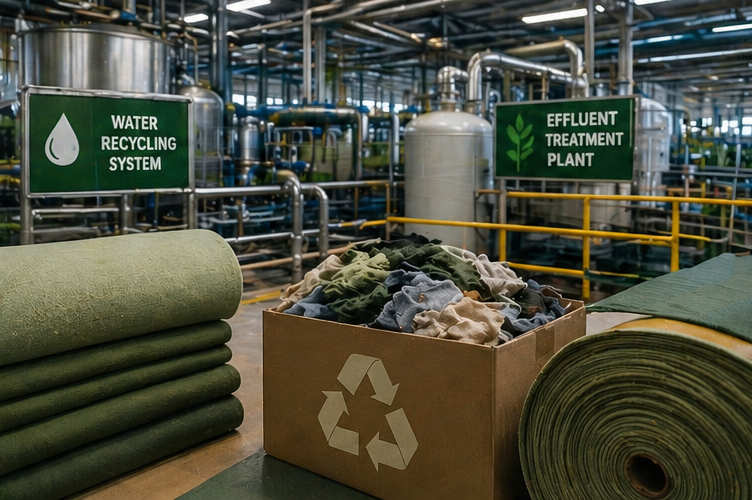
- Water Management Matters
- Textile production uses large amounts of water, especially in dyeing/finishing.
- ETPs (Effluent Treatment Plants) help treat wastewater and meet standards.
- Advanced suppliers use water recycling systems to:
- Reuse treated water
- Reduce freshwater dependency
- Indicates strong environmental responsibility.
- Waste Management & Circularity
- Traditional systems treat fabric scraps as waste.
- Modern suppliers:
- Reuse, sell, or upcycle scraps into new products
- Reduces landfill waste and creates additional value.
- Reflects a resource-efficient, circular approach.
- Efficiency as Sustainability
- Small operational improvements can drive big impact:
- Better production planning, less overproduction
- Improved fabric usage, less waste
- Shipment consolidation & inventory control
- Leads to a more efficient, low-impact supply chain.
- Small operational improvements can drive big impact:
- Balancing Cost and Value
- Sustainable practices may increase upfront costs.
- Extremely low prices often hide:
- Poor quality
- Environmental shortcuts
- Unethical labor practices
- Focus should be on long-term value, not short-term savings.
- Continuous Improvement Approach
- Sustainability is gradual, not instant.
- Start with:
- Better supplier selection
- Improvements in key processes or products
- Progress builds over time through consistent effort.
- Choosing the Right Partner
- Strong sourcing partners provide:
- Structure, accountability, and sustainable practices
- Example approach includes:
- Water treatment & recycling systems
- Responsible waste management & upcycling
- Good partners simplify sustainability without compromising quality.
- Strong sourcing partners provide:
- Conclusion
- Sustainable sourcing is about informed, intentional decisions.
- Buyers influence both what and how products are made.
- Focus areas:
- Water management
- Waste reduction
- Operational efficiency
- Goal: Build resilient, future-ready supply chains.
Key mindset: Progress over perfection—consistent, better choices over time